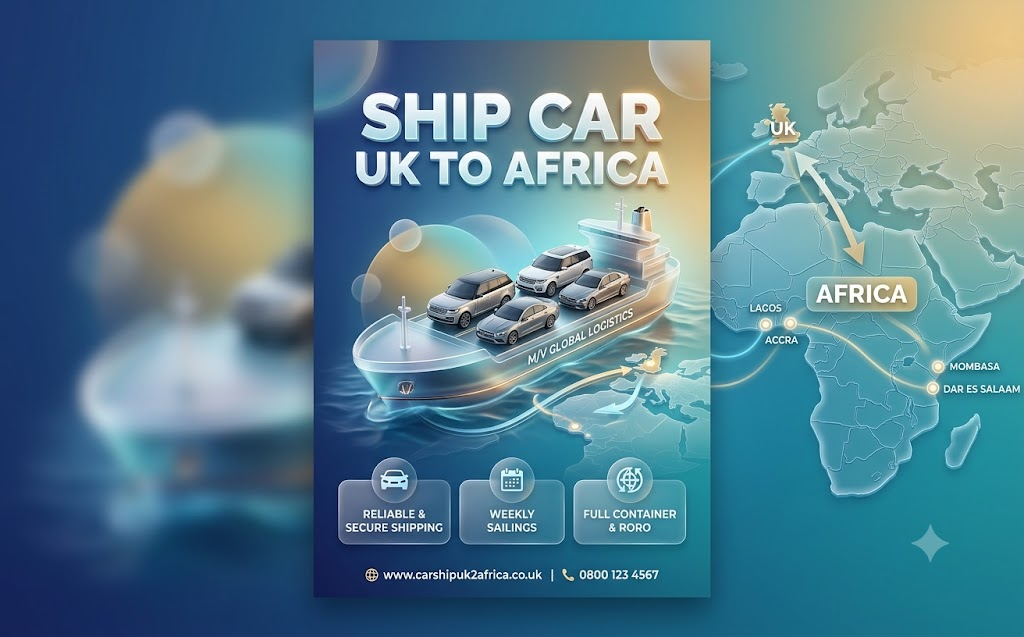
The Ultimate Guide to Ship Car UK to Africa: Secure, Efficient RORO Solutions
Shipping a vehicle across continents is a major logistical undertaking. Whether you are an expatriate returning home, a business owner managing commercial fleet expansion, or an automotive trader exporting a premium vehicle, selecting the optimal maritime transport method dictates the safety and efficiency of your entire journey. For the vast majority of operational passenger cars, luxury SUVs, and commercial vans, Roll-on/Roll-off (RORO) shipping is the industry’s most trusted framework for cost management and transit security.
When planning to move a vehicle from British ports to the African continent, understanding the core logistics of a comprehensive ship car UK to Africa strategy is essential. This expert guide details the exact mechanics of RORO operations, explores its core financial and efficiency advantages, outlines regional import parameters, and provides a clear preparation checklist to ensure a seamless customs clearance experience.
What is RORO Shipping and How Does It Work?
Roll-on/Roll-off shipping is a specialized maritime method engineered specifically for wheeled cargo. Unlike traditional containerized transport, where a vehicle must be manually hoisted and stuffed inside a static steel box, RORO vessels operate like massive, enclosed floating parking structures with multi-level internal decks.
The operational flow at major maritime hubs is exceptionally streamlined:
- Professional terminal operators drive your vehicle up a specialized ramp directly into the protected hull of the vessel.
- The car is parked in an assigned structural bay, completely shielded from salt water, harsh marine weather elements, and shifting hazards.
- Deck crews secure the vehicle directly to the ship’s integrated flooring grid using high-tensile, multi-point lashing straps and heavy-duty wheel chocks.
- Upon arrival at major African port terminals, the process reverses safely—straps are unlashed, and handlers drive the vehicle smoothly off the vessel for customs staging.
Key Advantages of RORO for UK to Africa Routes
When organizing your shipping timeline, evaluating containerization against RORO is an important step. While containers serve a purpose for non-running salvage vehicles or when moving complete household estates simultaneously, RORO remains the preferred choice for commercial operators and private shippers due to several distinct benefits.
1. Significant Cost Optimization
With container shipping, you bear the financial responsibility of renting an entire steel container alongside complex crane rigging fees at both the origin and destination terminals. With RORO, you only pay for the exact physical footprint your vehicle occupies on the deck. This structural pricing model makes it the most economical way to move vehicles across global shipping lanes.
2. Minimized Handling Risks
The loading process for containers requires multiple touchpoints—including warehouse transit, block-and-tackle winching, and structural positioning. RORO eliminates these complex intermediate handling phases completely. Fewer touchpoints naturally translate to a statistically lower risk of cosmetic, body, or structural damage during port preparation.
3. Streamlined Port Clearance Execution
Because RORO cargo can be driven off the vessel immediately upon arrival, port congestion bottlenecks are drastically reduced. Staging authorities at destination terminals can swiftly inspect and move the vehicles to secure holding zones, allowing your customs broker to initiate clearance protocols without waiting for complex container de-stuffing procedures. For a seamless shipping experience, managing your initial booking through an experienced specialist like ship car UK to Africa ensures your documentation aligns precisely with the latest carrier requirements.
+-----------------------------------------------------------------+
|                    UK TO AFRICA MARITIME TIMELINE               |
+-----------------------------------------------------------------+
|  [Phase 1] UK Port Drop-off & Export Customs Documentation      |
|  [Phase 2] Secure Ramp Loading & Multi-Point Internal Lashing   |
|  [Phase 3] 2 to 4 Weeks Ocean Transit via Major Shipping Lanes  |
|  [Phase 4] Offloading at Destination Port & Customs Assessment |
+-----------------------------------------------------------------+
Factors That Influence Ocean Freight Costs and Timelines
Calculating your total financial layout requires looking closely at how maritime carriers structure their rates. Your final export quote is typically shaped by three distinct variables:
Overall Volumetric Footprint
Because deck space is at a premium inside modern transport vessels, shipping rates are calculated based on your vehicle’s total volume in cubic meters ($Length \times Width \times Height$). Consequently, a compact hatchback or luxury sedan will naturally command a lower base rate than a large long-wheelbase cargo van or an automated 4×4 vehicle.
Import Policy Regulations
Different African nations maintain strict import rules regarding the age of vehicles brought into the country under various schemes (such as age caps on used cars in Kenya, Nigeria, or South Africa). Ensuring your vehicle aligns perfectly with these age limits is vital before booking freight space, as non-compliant vehicles face steep penalties or rejection at the destination port.
Terminal Handling and Logistics Layout
Beyond ocean freight fees, you must account for localized terminal handling charges (OTHC and DTHC), customs documentation fees, and applicable destination-side import duties. Partnering with a dedicated platform makes navigating these compliance loops simple. By setting up your logistics through a dedicated transport provider like RORO shipping UK to Netherlands, shippers can easily coordinate highly efficient regional link-ups and international schedules with absolute transparency.
Essential Vehicle Preparation Checklist for RORO Transit
To maintain absolute safety on enclosed vehicle decks, international port authorities enforce rigorous compliance parameters. Shippers must complete the following preparation tasks prior to vehicle drop-off:
- De-clutter the Interior Cabin: Port safety protocols strictly prohibit the storage of personal items, luggage, or loose electronics inside the vehicle. The cabin must be completely clear; only the factory spare tire, jack, and emergency tools are allowed to stay.
- Keep Fuel Levels to 1/4 Tank: For fire safety on the open water, vehicles with full tanks will be turned away at the port gate. Ensure your fuel level is sitting at approximately one-quarter capacity or less.
- Ensure Mechanical Readiness: Your vehicle must be fully roadworthy, meaning it has functional steering, reliable brakes, and a healthy battery. Port handlers must be able to start and drive the car safely during terminal loading cycles.
- Secure Duplicate Keys: You must provide a clear, working copy of the vehicle’s ignition key to the port handling staff, as they require access to move the vehicle safely throughout the voyage stages.
Frequently Asked Questions (FAQ)
Can I ship a vehicle that does not run using RORO?
No. The core framework of Roll-on/Roll-off shipping relies on the vehicle being fully operational so it can be driven under its own power up the vessel’s ramps. Inoperable vehicles must be booked via dedicated container methods or specialized flatbed towing setups.
What are the main arrival ports for RORO vehicles in Africa?
The main ports for international RORO vehicle shipments from the United Kingdom include Lagos (Tin Can Island) in Nigeria, Mombasa in Kenya, Dar es Salaam in Tanzania, Tema in Ghana, and Durban in South Africa.
How long does a RORO voyage from the UK to Africa take?
Transit timelines vary depending on the specific carrier routing and destination port. On average, a RORO ocean voyage from major UK export hubs (such as Tilbury or Southampton) takes between 14 to 21 days for West Africa and 21 to 28 days for East and South Africa.
Conclusion
Utilizing Roll-on/Roll-off shipping is a practical, safe, and highly efficient strategy for moving a vehicle across international shipping lanes from the UK to Africa. By bypassing the unnecessary handling fees of container loading, maximizing space-saving terminal efficiency, and ensuring your asset remains fully protected throughout the ocean voyage, RORO delivers unmatched peace of mind. By cross-checking your documentation early, prepping your vehicle to strict port standards, and aligning your journey with trusted maritime specialists, you can ensure your vehicle reaches its destination completely free of logistical complications.